We put a basket of LEGO in the middle of every table, read one question out loud, and started a clock. Two minutes later a six-year-old in a gold star necklace was holding a green thing up over her head, waiting for somebody to ask her what it was.
That is the LEGO Block Party. A table full of bricks, a question with no right answer, and every kid getting ninety seconds to tell the room what they made. It ran for the first time this August at the Santa Barbara clubhouse in Boca Raton, for about twenty kids between four and twelve and the grown-ups who came with them. The bricks came out of bins under beds. Four or five families emptied theirs into baskets and that was the whole supply.
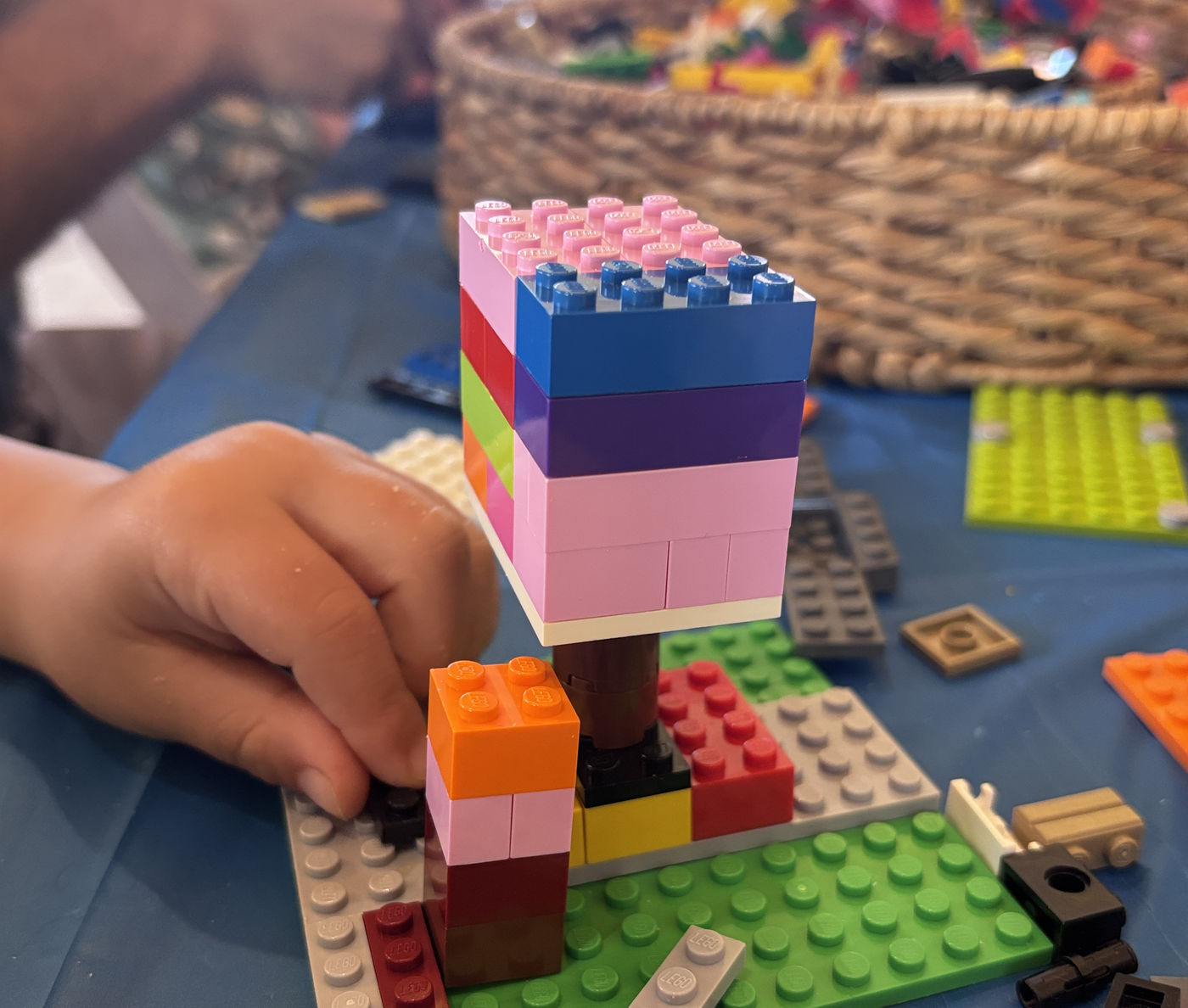
The first question of the evening was this one, word for word.“Build a tower. Any tower you want. It can be tall, or wide, or strange. You decide what makes it a tower. Two minutes. Go.” Then you stop talking, which is harder than it sounds, and you find out what a room of kids does with two minutes and no instructions.
Some of the towers fall over, and that is on purpose. When a kid is genuinely upset about it you say “you made that, so of course it mattered when it fell,” and then you move on, because that reaction is the point of the whole first ten minutes. After the tower comes a creature, then something that shows what you are good at, then a bridge you build with a partner you are not allowed to talk to, then a neighborhood the whole table builds together. Ten challenges, printed on cards, one per table.
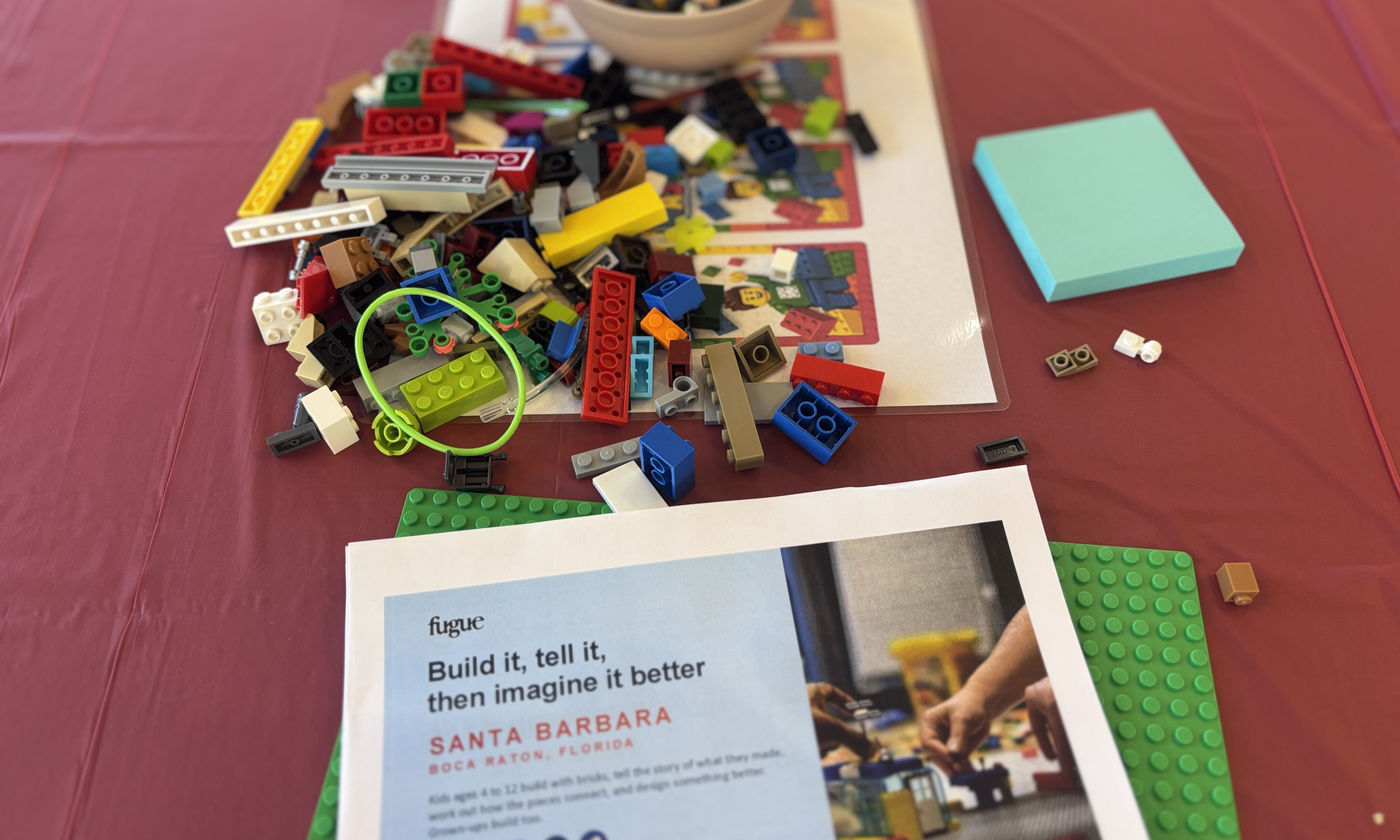
There is no wrong build, which is what gets a kid started
Ask a room of kids a question out loud and you learn who is comfortable talking. Hand them bricks and ask for the answer instead, and you learn what they think. Nobody in the room has to be good at drawing, or spelling, or speaking up first. Everybody can push two bricks together, and that turns out to be enough to say almost anything.
When a kid freezes, and one or two always do, the thing that works is “just start putting pieces together, your hands will figure it out.” It works nearly every time, and it works because it is true. Kids sort things out by making them, and they are better at it before school teaches them that thinking is something you do quietly at a desk.
Three good things happen underneath the fun, and you do not have to make them happen. Everybody gets heard, because everybody builds at the same time and then everybody shares, so the quiet kid and the loud kid get the same ninety seconds. Kids see how things connect, because once twenty of them have built one neighborhood the good question stops being “what did you make” and becomes “what happens if this moves.” And a first idea becomes a draft, because they build it, show it to somebody, watch that person's face, and get four more minutes to change it. Nobody has to explain revision.
Seven habits that are much easier to learn at six than at thirty-six
The bricks are the medium. These are what a kid is practising while they think they are playing, and most of them are habits a grown-up in a hard meeting is visibly struggling with.
A four-year-old and an eleven-year-old need different questions, not different rooms
A question sized for an eleven-year-old loses a four-year-old, and a question sized for a four-year-old sends an eleven-year-old off to find a phone. Splitting them by age solves it and costs you the thing worth having, which is what happens when they build together.
So every challenge is written three times. The tower question at the top of this page is the middle one of the three. Same table, same bricks, same clock, and nobody notices the questions are not identical.
Halfway through the evening the big kids get a job. Each one pairs up with a younger builder, and the little one's model is the seed. The older one adds to it using yes, and, and suddenly an eleven-year-old has a reason to care about a six-year-old's dragon. Adding to somebody else's idea without taking it over is the harder of the two jobs at that table, and the big kids work it out fast.
By the last hour they are running the design loop, and nobody has said the word design
The back half of the session is a design thinking workshop in everything except vocabulary. The sequence is deliberate and each step hands something to the next one.
It starts with a problem the kids own themselves. Build something that bugs you, something annoying or unfair or that just does not work right, and it can be small. Then build the person who has that problem. Most kids build the problem again on the first go and spot it themselves, and the second go is the first time a kid designs for somebody who is not themselves. Then ten ideas in ten minutes, one minute each, terrible encouraged, no stopping to make anything nice. Then build your favourite one properly. Then show it to a person outside your group, say nothing, watch their face, and take four minutes to change it.
Everything before that hour exists to make it possible. A kid who has not practised making one thing stand for another cannot build a person. A kid who has never had somebody add to their model without wrecking it will not hand it over. The early challenges look like warm-ups and they are load-bearing.
Twenty separate builds became one city, and somebody described a feedback loop
The neighborhood challenge asks each kid to build one place that matters to them, then carry it up to a shared board and argue about where it goes. The argument is the activity. Two kids who both want to be next to the park are doing town planning and have no idea.
Then somebody hands out string and asks what travels between the places. People, food, money, a feeling. What we listen for at that moment is one sentence, and it turned up in Boca Raton: and then it comes back to here. A kid who says that has described a feedback loop without having the word for it, and it is worth stopping the room to let everybody hear it.
Three moments from Boca Raton that we are still thinking about
Families came and went all evening, kids took seats wherever there was room, and the tables stayed full. Three moments have stayed with us.
The rules went on the table in somebody's handwriting. Five rules, written out by hand on a sheet of copy paper, one on every table, sitting in the middle of the bricks at the height where the building happens. Kids read them sideways while they worked, and by the second challenge some of them were saying the rules to each other. The printed version now follows the handwritten one, because a sheet in the middle of a table gets read all evening.
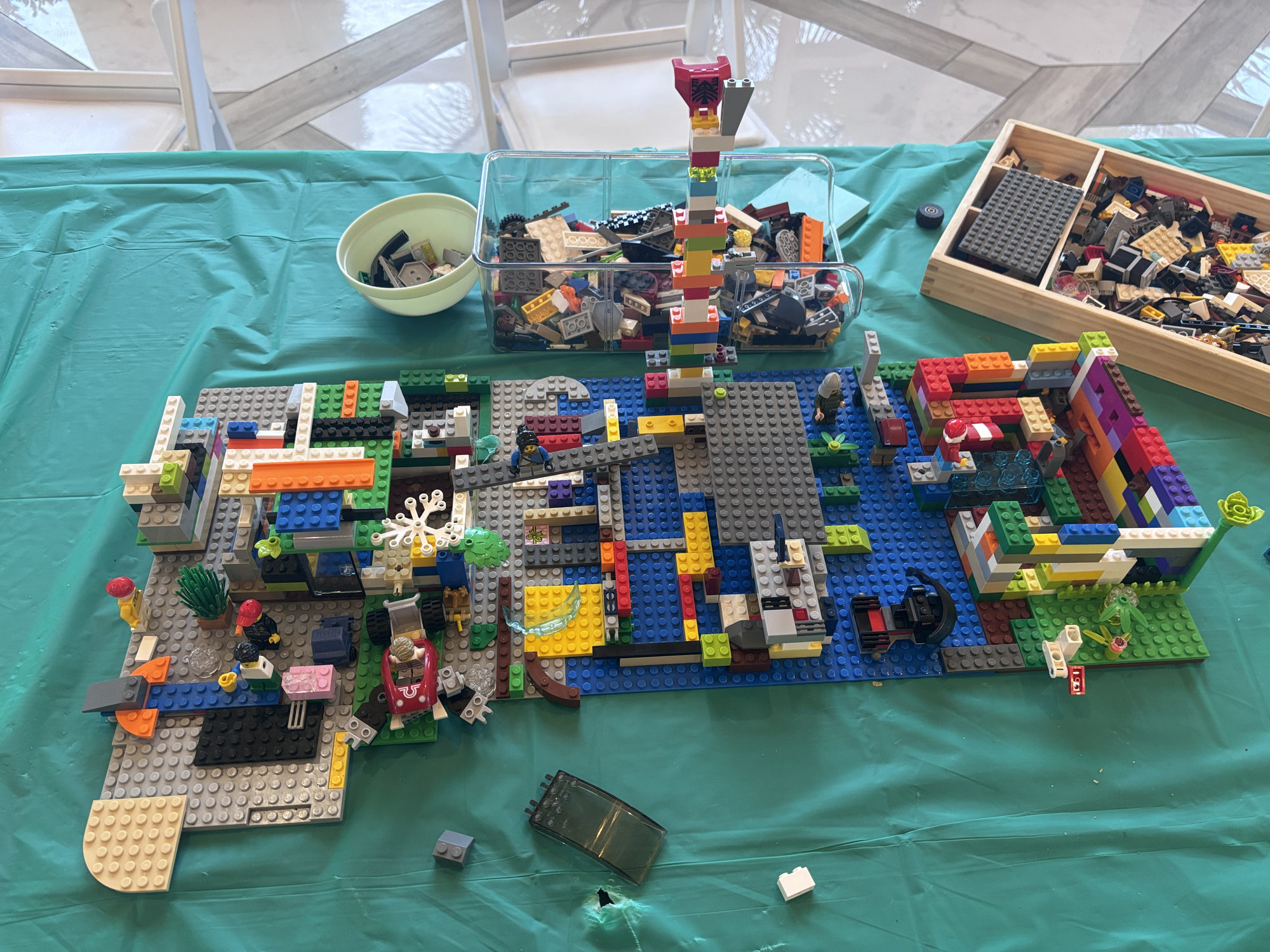
The tables built one city. They kept joining baseplates until the whole thing was continuous, with a waterway running down the middle of it and buildings worked around the edges. Every kid could put a finger on their own part. Nobody drew it first.
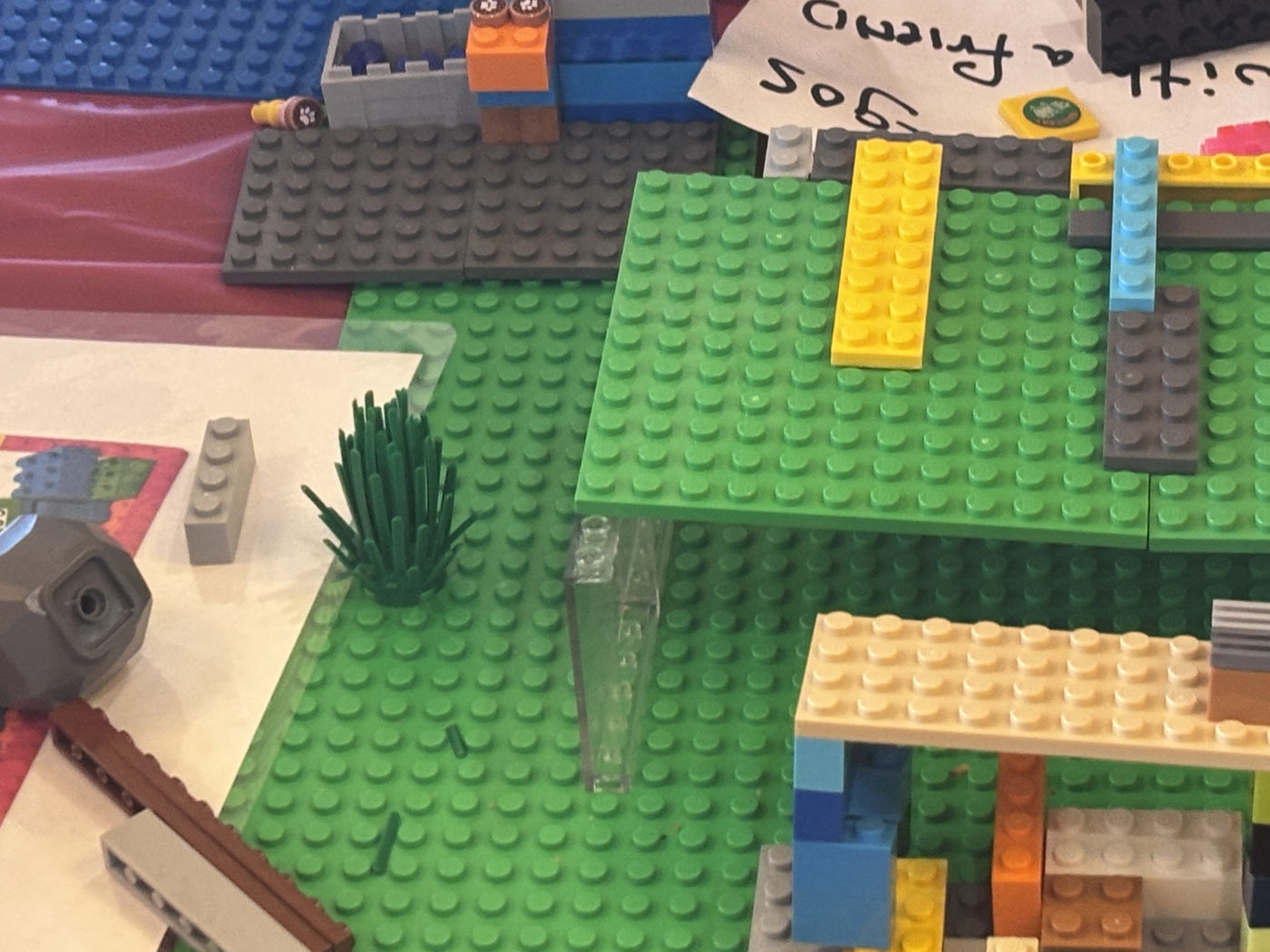
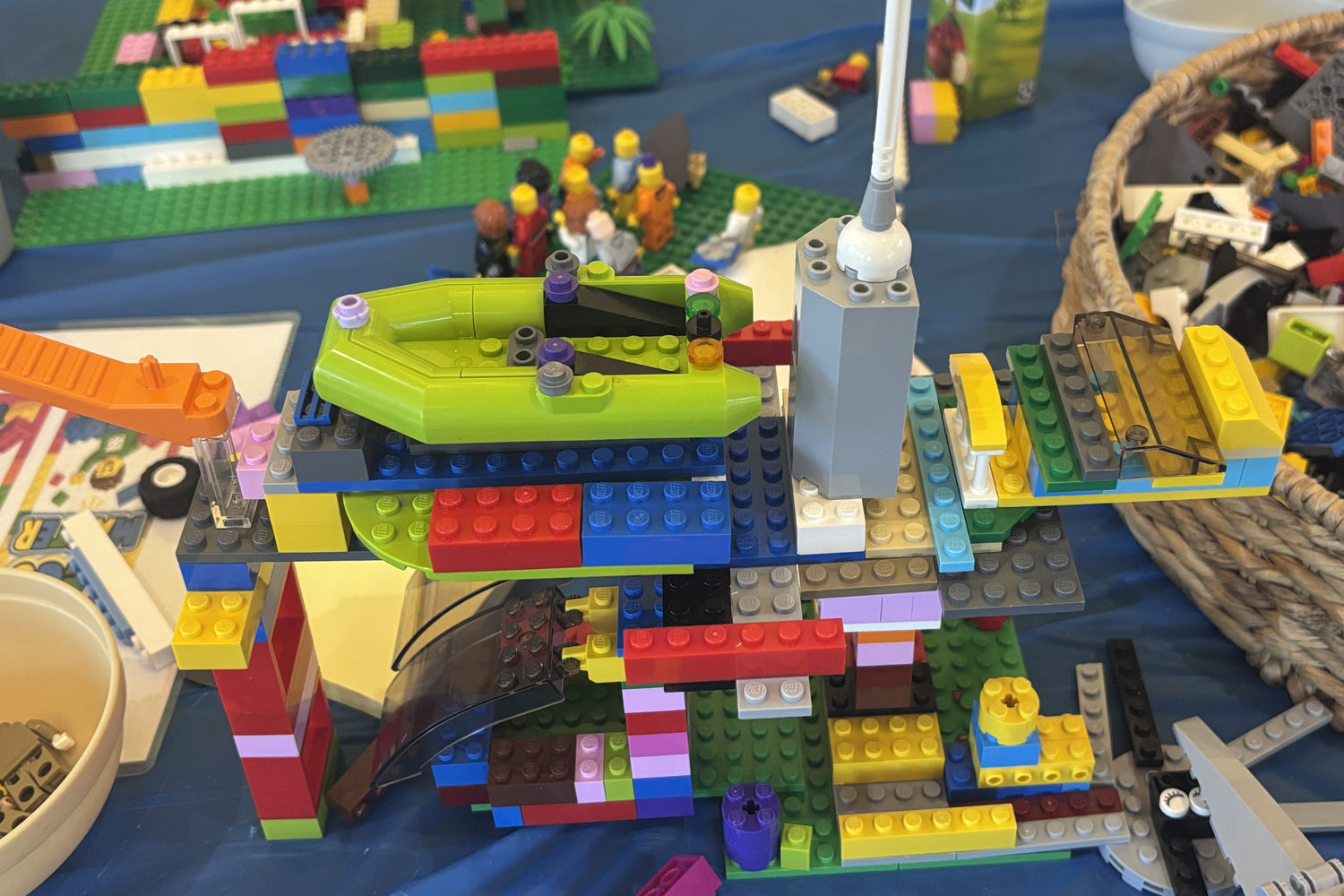
They built upward. Layered decks, a boat parked on an upper level, a platform raised on legs with the ground floor still in use underneath. Give kids a flat table and a pile of bricks and they go vertical, and the builds that came off those tables had rooms above rooms.
Everything we used is free, and the bricks are already in your community
There is nothing to buy here and nobody to hire. If you want to run a LEGO Block Party for your school, your congregation, your library, your scout troop or your street, take the material and run it. We would rather it got used than admired.
What you actually need is smaller than the material suggests. Enough bricks that nobody waits for a piece is usually less than people fear, and it can be gathered from four or five families emptying the bins under their children's beds. Two people willing to arrive thirty minutes early. A clock somebody is prepared to hold out loud. And food. Pizza, cookies and ice cream do no harm whatsoever, and they visibly helped our sprouts, our builders and our architects.
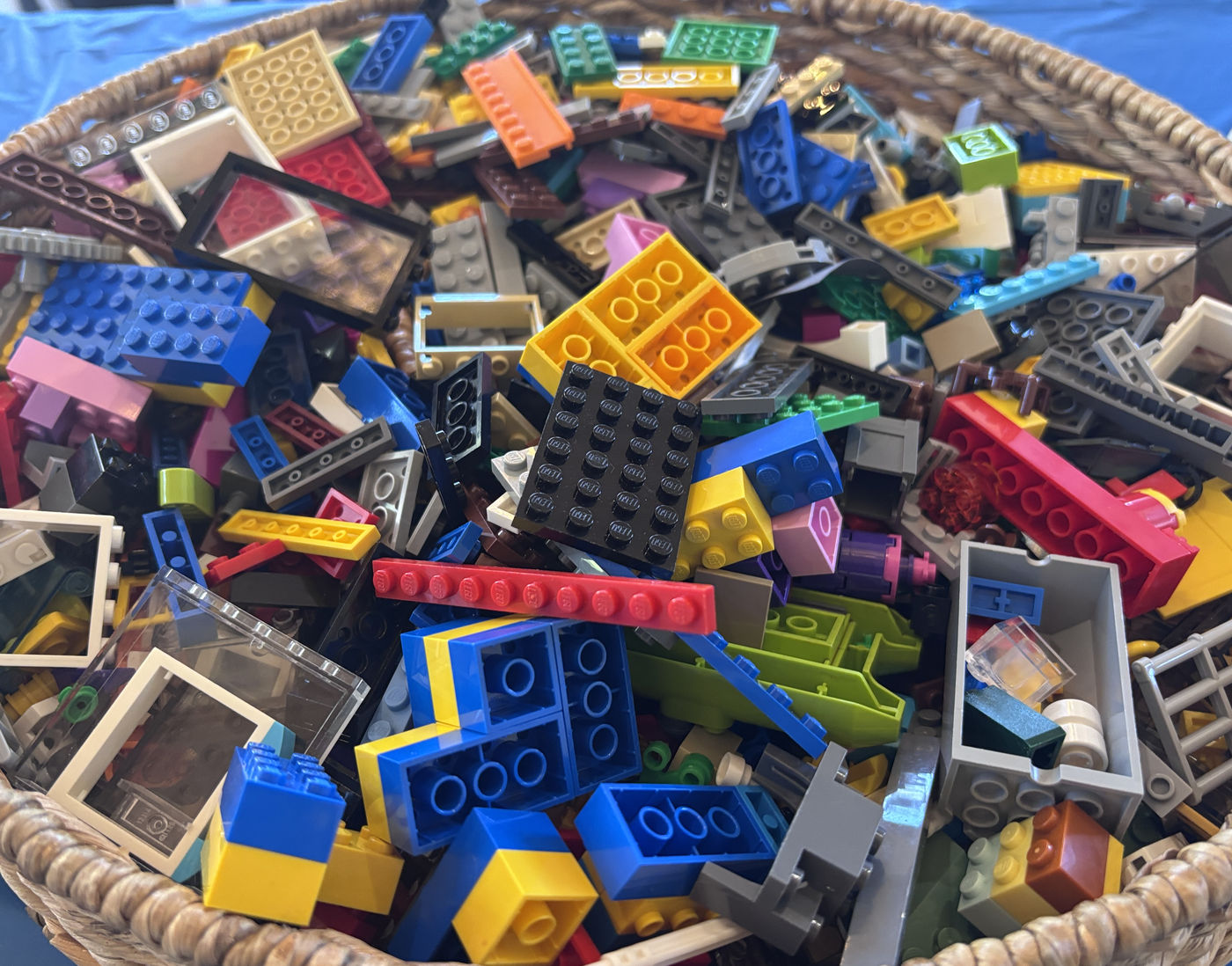
The hardest part is not the bricks. It is holding the room to the handful of things that make it work. Say the question and then stop talking. Do not guess what a model is, ask. Do not let anybody take somebody else's build apart. And protect the sharing, because building is where a kid works a thought out with their hands and sharing is where it turns into words they keep. Each of those is easy to write down and takes real discipline at 6:15 on a Tuesday when the room is loud.
Two things are worth saying to anybody about to try it. Start smaller than you think, because a single ninety-minute evening with two challenges and plenty of talking beats an ambitious plan that leaves nobody time to hear the stories. And put a grown-up in every chair with their own tray of bricks. An adult who is building is not an audience.
The facilitator deck is everything else. Every question written out word for word so nobody has to make one up while eight kids wait. The five rules as a poster and as a table card. Room layouts, what goes in the shared basket, a thirty-minute setup checklist, the six things that go wrong most and what to say when they do. And three session plans, from a sixty-minute drop-in to a four-week series.
Bring snacks. Start on time. Read the rules out loud.
The best sessions are the ones where you talked the least and everybody laughed most. That is the whole test, and it is a generous one. If a room full of neighbours builds a neighbourhood and argues cheerfully about where the ice cream place should go, you have run a good workshop, whether or not anybody ever says the word system.
Nobody has to finish the ladder either. A family who turns up once, builds a creature, laughs a lot and goes home has got the entire point. So clear a few tables, tip out the bins, and find out what your kids make.